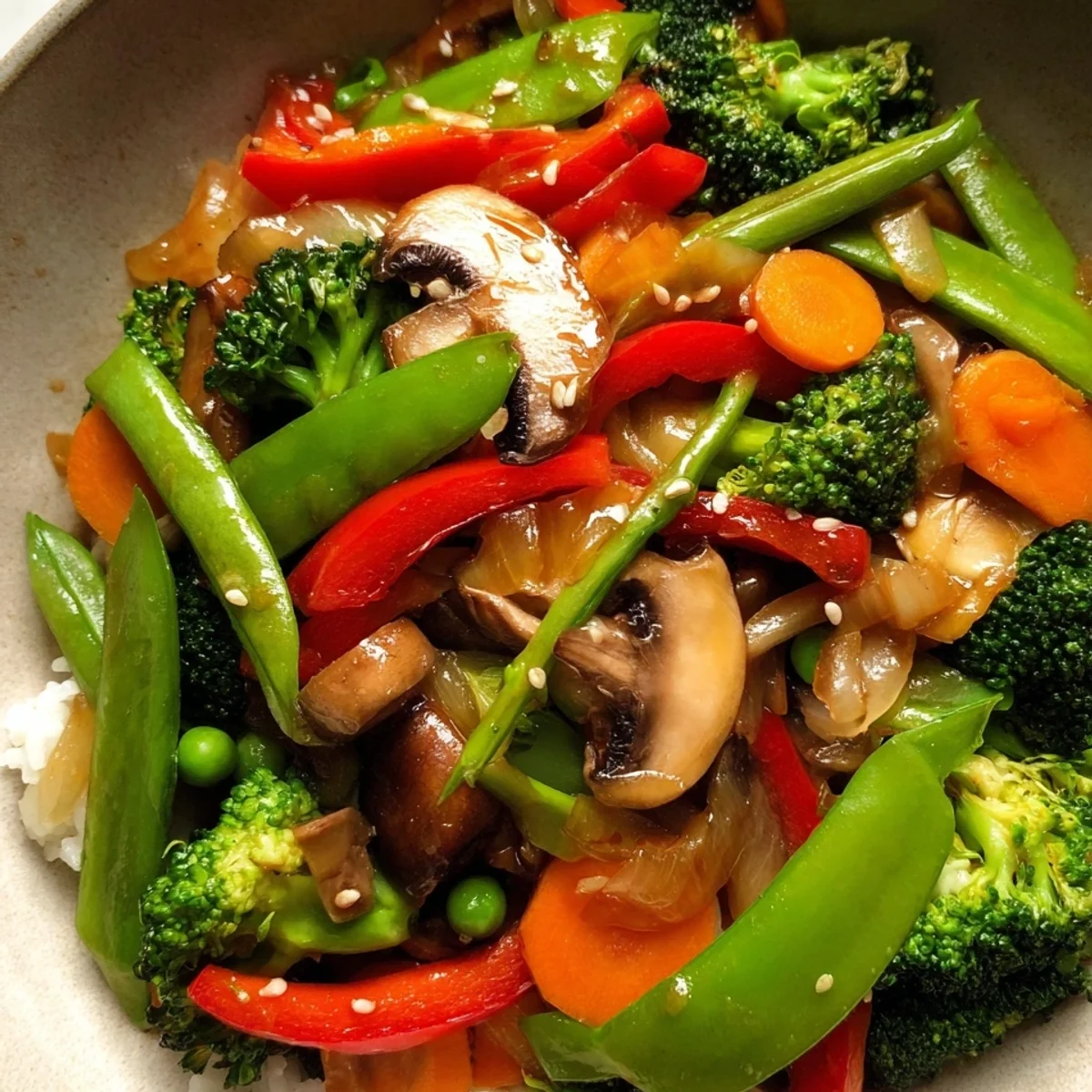


Oh, hey there, friend! Pull up a chair. You know how sometimes you just need something fast, healthy, and packed with flavor after a long day? That was me, ages ago, staring blankly into my fridge. I had a bunch of random veggies, no real plan, and then it hit me: a simple, vibrant Vegetable Stir Fry! It's been a weeknight hero ever since, honestly. A total game-changer for those busy evenings.
One time, I was so excited to get this Vegetable Stir Fry on the table, I totally forgot to mince the garlic and ginger. I just... sliced them huge. The first bite was like a raw garlic explosion! Oops. My husband still teases me about my 'rustic' aromatics. Lesson learned: prep those tiny bits properly!
The Ingredients for a Fantastic Vegetable Stir Fry
- 3 cups broccoli florets: Broccoli is my absolute non-negotiable for this dish. I love how it soaks up all that delicious sauce, and it still has that satisfying crunch if you don't overcook it. Plus, hello, green! It just makes the whole plate pop. I always make sure to cut them into bite-sized florets so they cook evenly with the other stars of this amazing stir fry.
- 1 large red bell pepper, thinly sliced: Red bell pepper brings that beautiful sweetness and a gorgeous splash of color. Honestly, I've tried green and yellow, but red just hits different in a Vegetable Stir Fry. It adds such a vibrant flavor and a lovely texture contrast. Make sure to slice it thinly so it cooks up quickly and gets perfectly tender-crisp.
- 2 medium carrots, julienned: Carrots are amazing for adding a natural sweetness and a bit of earthy depth. Plus, their bright orange is just so cheerful! Julienne them, hon, it makes a huge difference in how they cook and how they look in the final dish. They soften up just enough but still offer a nice bite. So good!
- 1 cup snap peas: Snap peas are one of those ingredients that just scream 'fresh.' I adore their crispness and sweet pop. They cook super fast, so they go in towards the end. They add a fantastic texture and a bright green color that makes the whole plate feel alive. Don't skip these little guys, they're delightful!
- 8 oz cremini mushrooms, sliced: Mushrooms are fantastic for adding an umami punch and a meaty texture, which is great for a veggie-focused meal. Cremini, or baby 'bellas as I call them, are my go-to. They get beautifully browned and savory. They really round out the flavor profile of this quick Vegetable Stir Fry, giving it a rich depth you'll adore.
- 3 cloves garlic, minced, and 1 tbsp fresh ginger, grated: These two? They're the soul of any good Asian-inspired dish, especially a stir fry. That fragrant explosion when they hit the hot oil? Oh, it's pure magic! Fresh is key here, don't even think about powdered. They build that essential aromatic foundation that makes this dish so incredibly flavorful. Trust me, your kitchen will smell amazing.
Mastering Your Vegetable Stir Fry: Step-by-Step
- Step 1: Prep All Your Veggies Like a Pro:
- Okay, first things first, get all your veggies chopped and ready. This is called 'mise en place' and it's your secret weapon for a successful stir fry, trust me. You want those broccoli florets, bell pepper slices, julienned carrots, and sliced mushrooms all lined up and waiting. This isn't a dish where you can chop as you go, the cooking moves too fast! Having everything ready means a smooth, stress-free cooking experience for your Vegetable Stir Fry.
- Step 2: Whisk Up That Irresistible Stir Fry Sauce:
- Next, let's get that sauce together! Grab a small bowl and whisk together your low-sodium soy sauce and rice vinegar. That's it! So simple, yet so effective. This little concoction is going to coat every single piece of your Vegetable Stir Fry, infusing it with that perfect balance of salty and tangy. Set it aside, because you'll be pouring this liquid gold in at the very end. Get excited, it's flavor central!
- Step 3: Heat the Oil and Awaken the Aromatics:
- Time to get cooking! Heat your canola oil in a large skillet or wok over medium-high heat until it shimmers. Once it's hot, toss in your minced garlic and grated ginger. Oh my goodness, the smell! This is where the magic begins. Sauté them for just about 30 seconds, stirring constantly, until they're fragrant. Don't let them burn, hon, or your whole Vegetable Stir Fry will taste bitter. You're just waking up those incredible flavors.
- Step 4: Stir Fry the Harder Veggies First:
- Now, add your harder veggies to the pan: the broccoli florets, red bell pepper, and julienned carrots. Stir fry them for about 4-5 minutes, keeping them moving constantly. You want them to start getting tender-crisp, with a little char on the edges, but still retaining some bite. This is crucial for texture in your final dish. We're building layers of flavor and texture for the perfect Vegetable Stir Fry.
- Step 5: Introduce the Softer Vegetables to the Party:
- Once those harder veggies have a head start, it's time for the softer ones to join. Toss in your sliced cremini mushrooms and snap peas. Continue to stir fry for another 2-3 minutes. These guys cook pretty quickly, and we want them vibrant and crisp, not soggy. Keep that heat up and keep stirring! Everything should be looking bright and inviting now, ready for the grand finale of our Easy Vegetable Stir Fry.
- Step 6: Sauce It Up and Serve!:
- Finally, give your whisked sauce one last stir and pour it over all those beautiful, colorful vegetables in the pan. Toss everything together for about 1 minute, letting the sauce coat every piece and thicken slightly. It'll get glossy and gorgeous! Remove from heat immediately. This Easy Vegetable Stir Fry is best served right away, piping hot. Garnish with a sprinkle of sesame seeds or fresh green onions if you're feeling fancy!
Honestly, cooking this dish feels like a little dance in the kitchen. It's quick, it's colorful, and it smells divine as those aromatics hit the pan. I just love how you can see the veggies transform, getting brighter and more tender with each stir. It’s such a rewarding meal to make, and even more so to eat!
Keeping Your Vegetable Stir Fry Fresh: Storage Secrets
Got leftovers? Lucky you! This Vegetable Stir Fry actually holds up pretty well. Just make sure it cools completely before you transfer it to an airtight container. Pop it in the fridge, and it'll be good for 3-4 days. I've definitely made the mistake of putting warm stir fry straight into a container, and it gets a bit mushy, which is a bummer. When reheating, I like to use a skillet again to get some of that crispness back, rather than the microwave. Just a quick toss over medium-high heat, and it's almost as good as fresh!

Playing Around with Your Vegetable Stir Fry: Easy Swaps
Oh, the fun part! I've experimented a ton with this recipe. No broccoli? Try asparagus, green beans, or even chopped bok choy. Bell peppers can swap for zucchini or yellow squash. If you're out of snap peas, frozen peas work in a pinch, just add them at the very end. For mushrooms, shiitake or button mushrooms are great. And if you're feeling adventurous, add some protein! Tofu, chicken, or shrimp cook up beautifully right alongside the veggies. The beauty of this Vegetable Stir Fry is its adaptability!
What to Serve with Your Amazing Vegetable Stir Fry
This Vegetable Stir Fry is amazing on its own, but let's be real, a little something extra never hurt anyone! My absolute favorite way to serve it is over fluffy jasmine rice it just soaks up all that delicious sauce. Brown rice or quinoa are also fantastic for a healthier spin. If you're skipping grains, try serving it over a bed of fresh spinach that will wilt from the heat. And for a little extra crunch, a sprinkle of toasted sesame seeds or chopped peanuts is always a win. Don't forget a drizzle of sriracha if you like it spicy!
The Roots of a Quick Meal: A Little History on Vegetable Stir Fry
Stir-frying, at its heart, is an ancient Chinese cooking technique, dating back thousands of years! It started as a way to cook food quickly using minimal fuel, often in a wok. The method spread across Asia, adapting to local ingredients and flavors. While my specific Vegetable Stir Fry recipe is a modern, Western-friendly take, it definitely honors that tradition of fast, high-heat cooking that locks in flavor and nutrients. It's cool to think that you're part of a culinary lineage stretching back centuries every time you whip up a quick meal like this!
There you have it, my friends! My go-to, stress-free, flavor-packed Vegetable Stir Fry. It's more than just a recipe, it's a little bit of weeknight sanity in a bowl. I hope you love it as much as I do. Give it a try, play with your favorite veggies, and tell me all about your creations in the comments below! Happy cooking!

Your Burning Questions About Vegetable Stir Fry, Answered!
- → Can I use frozen vegetables for this Vegetable Stir Fry?
You totally can, but be aware they might release more water and make the dish a bit less crisp. Thaw them first and pat them really dry. Add them towards the end of the cooking process so they don't get mushy. It'll still taste great, just a slight texture difference!
- → How can I make my stir fry spicier?
Oh, I love a good kick! You can add a pinch of red pepper flakes with the garlic and ginger for a subtle heat. Or, for a bigger punch, drizzle some sriracha over your serving. A little chili garlic sauce in the stir fry sauce itself also works wonders, just adjust to your taste!
- → What if I don't have rice vinegar?
No rice vinegar? No problem! You can use apple cider vinegar or white wine vinegar as a decent substitute. They'll give you a similar tangy brightness, though the flavor will be slightly different. Don't let a missing ingredient stop you from making this delicious dish!
- → Can I add a protein to this recipe?
Absolutely! This recipe is super versatile. Chicken, shrimp, or tofu are fantastic additions. For chicken or shrimp, cook them first until almost done, remove from the pan, then proceed with the veggies. Add them back in with the sauce. For tofu, press it, cube it, and pan-fry until golden before adding back in.
- → Why is my stir fry sauce not thickening?
Hmm, a few reasons! Make sure your heat is high enough when you add the sauce it needs to bubble and reduce a bit. Also, if your soy sauce isn't low-sodium, it might be too salty to reduce much. Sometimes I add a tiny bit of cornstarch slurry (1 tsp cornstarch mixed with 1 tbsp water) at the very end to help it thicken up perfectly.