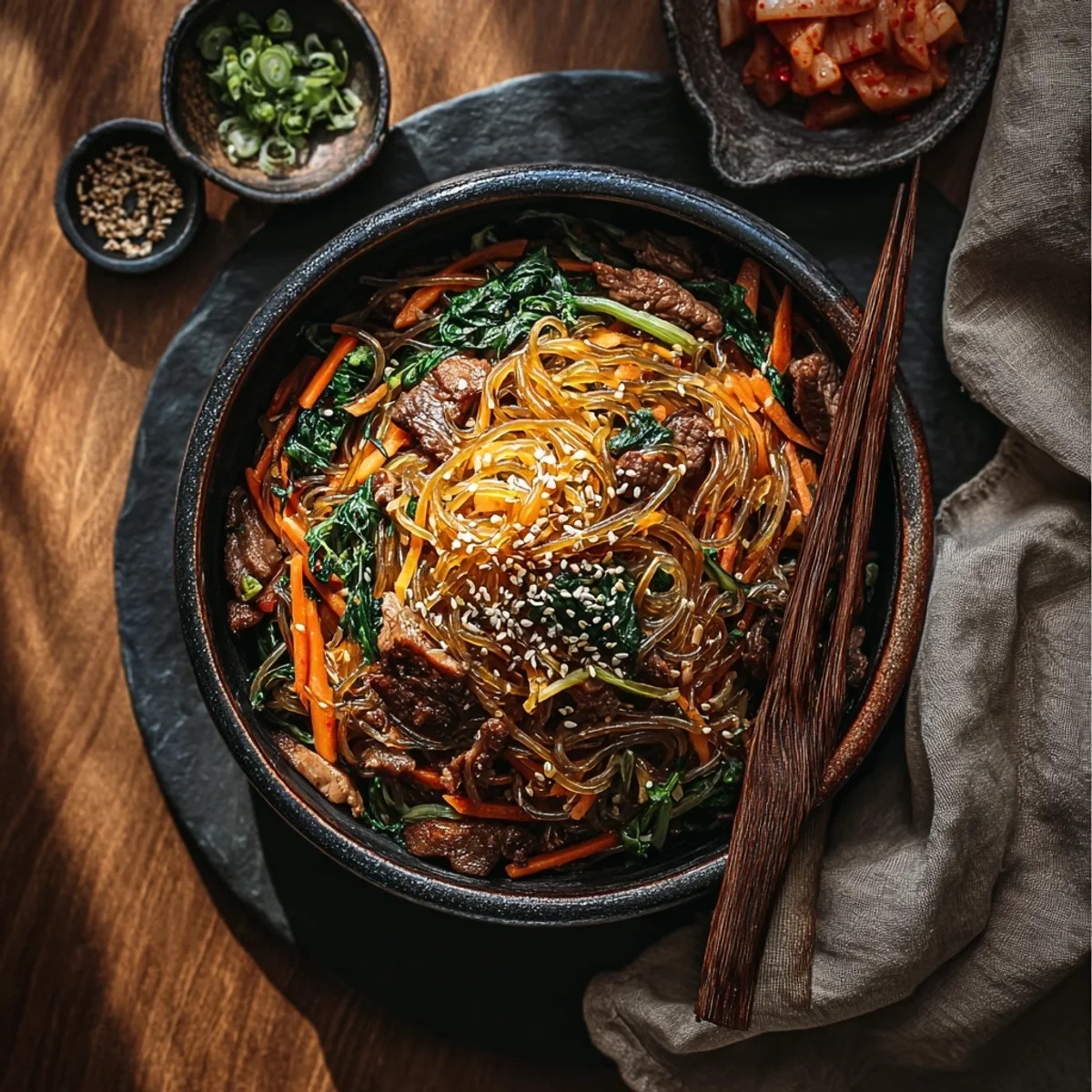


Oh, Japchae! This dish takes me right back to my tiny college apartment, clumsily trying to recreate the magic from my favorite korean restaurant down the street. I swear, the first time I made it, my kitchen looked like a tornado hit a vegetable stand. Noodles flew, soy sauce splattered, and I probably used enough garlic to ward off vampires for a year. But even with the chaos, that first bite of bouncy glass noodles, savory sauce, and perfectly cooked veggies? Pure bliss. It’s comforting, it’s vibrant, and honestly, it just feels like a hug in a bowl. This isn't just a recipe, it's a memory.
I remember one time, I was so excited to make Authentic Korean Japchae for a potluck, I completely forgot to soak the noodles. Yep, tried to boil them straight from the package. Disaster! They clumped into this weird, starchy blob. My friend still teases me about my "noodle cement." Lesson learned: patience is key, especially with those sweet potato glass noodles. My kitchen usually ends up a bit messy, but hey, that's part of the fun, right?
Authentic Korean Japchae Ingredients
- Korean Sweet Potato Glass Noodles (Dangmyeon): These are the star, hon! They’re chewy and bouncy, not like regular wheat noodles. Don't try to substitute with spaghetti, it just won't be the same. I've tried, it was a sad day.
- beef Sirloin or Ribeye: Thinly sliced, please! It cooks quickly and absorbs all that savory goodness. You can swap for chicken or even firm tofu if you prefer, I've had success with both.
- Fresh Spinach: Just a quick blanch for a pop of green and a touch of earthy flavor. Don't let it get soggy, nobody wants sad spinach.
- Carrots: Julienne them for that beautiful color and a little crunch. I always seem to make a mess with my mandoline, but it's worth it!
- Onion: Sliced thin, it adds a lovely sweetness when sautéed. I honestly think it's one of those unsung heroes in this dish.
- Shiitake Mushrooms: Earthy, meaty, and so good. Fresh is definitely better here, but dried and rehydrated works in a pinch (I've done it, and it was... fine!).
- Garlic: Minced, and honestly, I usually add an extra clove or two because, well, it's garlic!
- Soy Sauce (low sodium): The base of our amazing sauce. I prefer low sodium so I can control the saltiness myself.
- Sesame Oil: Toasted sesame oil is a must for that distinctive nutty aroma and flavor. Don't skimp, it's crucial for Authentic Korean Japchae.
- Sugar (or honey): Just a touch to balance the savory and salty. I usually use brown sugar for a richer caramel note.
- Black Pepper: Freshly ground makes a difference, trust me.
- Sesame Seeds: For garnish and that extra nutty crunch. I sprinkle them on everything, sometimes too much.
Cooking Authentic Korean Japchae
- Prep Your Veggies & Protein:
- First things first, get all your chopping done. Seriously, this is a stir-fry, it moves fast! Slice your beef super thin, julienne those carrots, slice the onion and mushrooms. Blanch your spinach quickly in boiling water, then immediately plunge it into an ice bath to stop cooking. Squeeze out all that extra water I mean ALL of it or your Authentic Korean Japchae will be watery. I always forget a bowl for the ice bath and end up scrambling, oops!
- Soak the Noodles & Make the Sauce:
- While your veggies are chilling, get those glass noodles soaking in warm water for about 20-30 minutes. You want them pliable, but not mushy. This is where I always double-check the package instructions because sometimes different brands vary. In a small bowl, whisk together the soy sauce, sesame oil, sugar (or honey), and black pepper for your sauce. Taste it! Adjust to your liking more sweet, more savory? You're the chef here!
- Sauté the Vegetables:
- Heat a large skillet or wok with a bit of oil over medium-high heat. Sauté the carrots first for a couple of minutes until they start to soften, then add the onions and mushrooms. Cook until tender and slightly caramelized you'll smell that lovely sweetness starting to develop. Remove them from the pan and set aside. Don't overcrowd the pan, or they'll steam instead of sauté. I learned that the hard way, with sad, pale veggies.
- Cook the Beef:
- Add a little more oil to the pan if needed, then quickly stir-fry your thinly sliced beef until it's just cooked through. We're talking a minute or two, max! Overcooked beef is tough beef, and nobody wants that in their Authentic Korean Japchae. Remove the beef from the pan and add it to your cooked vegetables. This keeps everything tender and prevents overcooking.
- Stir-Fry the Noodles:
- Drain your soaked noodles well. If they're super long, you can give them a quick snip with kitchen shears makes eating them much easier! Add the noodles to the hot pan along with your prepared sauce. Stir-fry for about 2-3 minutes, tossing constantly, until the noodles are evenly coated and heated through. They should be glossy and slightly translucent. This step smells incredible, by the way!
- Combine and Finish the Authentic Korean Japchae:
- Return all the cooked vegetables, beef, and the blanched spinach to the pan with the noodles. Toss everything together gently until well combined and heated through. Make sure that beautiful sauce coats every single strand of noodle and every piece of veggie. Taste one more time and adjust seasoning if needed. Garnish generously with sesame seeds before serving. It should look vibrant, smell amazing, and taste even better!
Making Authentic Korean Japchae always brings a smile to my face, even if I get a little sauce on my shirt (it happens!). There’s something so satisfying about seeing all those colorful ingredients come together in one big, delicious stir-fry. It’s a dish that feels special, but totally achievable in your own kitchen, even if you make a few happy messes along the way.
Storing Authentic Korean Japchae
Okay, so storing Authentic Korean Japchae is pretty straightforward, but there are a few things I've learned from personal experience. This dish actually holds up beautifully as leftovers, which is why it's a meal-prep champion in my book! Just pop any cooled leftovers into an airtight container and store it in the fridge. It'll stay delicious for about 3-4 days. I've microwaved it once and the noodles got a little softer than I like, so I prefer reheating it gently in a skillet over medium heat. A splash of water or a tiny bit more sesame oil can help revive the noodles and keep them from sticking. It even tastes pretty good cold, straight from the fridge, if you're into that kind of thing (I totally am sometimes!).

Authentic Korean Japchae Substitutions
I'm all about experimenting in the kitchen, so I've tried a few swaps for this Authentic Korean Japchae recipe! If beef isn't your thing, thinly sliced chicken breast or even firm tofu works wonderfully. For a vegetarian version, just omit the beef and maybe add more mushrooms or some bell peppers for extra crunch and color. I once used a mix of cremini and oyster mushrooms, and it added a fantastic depth of flavor. If you don't have fresh spinach, a bag of frozen, thawed, and squeezed-dry spinach can work in a pinch I tried it once, and it was... acceptable! You can also swap out carrots for thinly sliced zucchini if you want to change up the veggie game. Just make sure whatever you add cooks relatively quickly.
Serving Authentic Korean Japchae
Authentic Korean Japchae is pretty much a complete meal on its own, but sometimes you just want to make it extra special, right? For a light dinner, I love serving it with a simple side of kimchi the tangy, spicy crunch is a fantastic contrast to the savory noodles. If I'm feeling fancy, a side of steamed dumplings or a quick cucumber salad always hits the spot. And for drinks? Honestly, a cold beer or a crisp glass of white wine pairs beautifully. Or, if it's a cozy night in, this dish and a good K-drama? Yes please! It’s versatile enough for a weeknight dinner or to impress guests at a potluck.
Cultural Backstory of Japchae
Japchae, or 잡채, holds such a special place in Korean cuisine, and it’s become dear to my heart too. It literally translates to "mixed vegetables," but it's so much more than that! Historically, it was a royal dish, initially made without noodles, just a stir-fry of various vegetables. The glass noodles, made from sweet potato starch, were added later and totally revolutionized the dish into the beloved form we know today. For me, discovering Authentic Korean Japchae was like finding a new culinary language. It taught me about balancing sweet, savory, and umami flavors, and the importance of texture. It’s often served at special occasions and holidays, symbolizing prosperity and good fortune, which makes every bite feel a little extra special.
And there you have it, my take on Authentic Korean Japchae! It’s a dish that’s seen me through countless evenings, from celebratory dinners to comforting solo meals. The colors, the textures, that incredible savory-sweet sauce… it just works, every single time. I hope you give it a try in your own kitchen, embrace the little messes, and fall in love with it just like I did. Don't forget to share your Japchae adventures with me!

Frequently Asked Questions
- → Can I make Authentic Korean Japchae ahead of time?
Absolutely! It's fantastic for meal prep. Just store it in an airtight container in the fridge for up to 3-4 days. I often make a big batch on Sunday for quick lunches.
- → What if I can't find Korean glass noodles?
While traditional dangmyeon is best for Authentic Korean Japchae, in a pinch, you could try thin vermicelli rice noodles. I've used them once, and it tasted different, but still pretty good, just not the same chew!
- → My noodles stuck together, what did I do wrong?
Ah, the dreaded sticky noodle! Usually, it means they weren't tossed enough with the oil and sauce, or they were slightly overcooked. Make sure to rinse them briefly after soaking if they feel too sticky before adding to the pan.
- → How do I reheat leftover Authentic Korean Japchae?
I prefer reheating gently in a skillet over medium heat with a tiny splash of water or sesame oil to loosen them up. The microwave works, but the texture can get a bit soft for my liking.
- → Can I add other vegetables to this Authentic Korean Japchae?
Oh, for sure! Bell peppers, zucchini, bok choy, even edamame would be lovely. Just remember to slice them thinly so they cook quickly and evenly with the other ingredients.