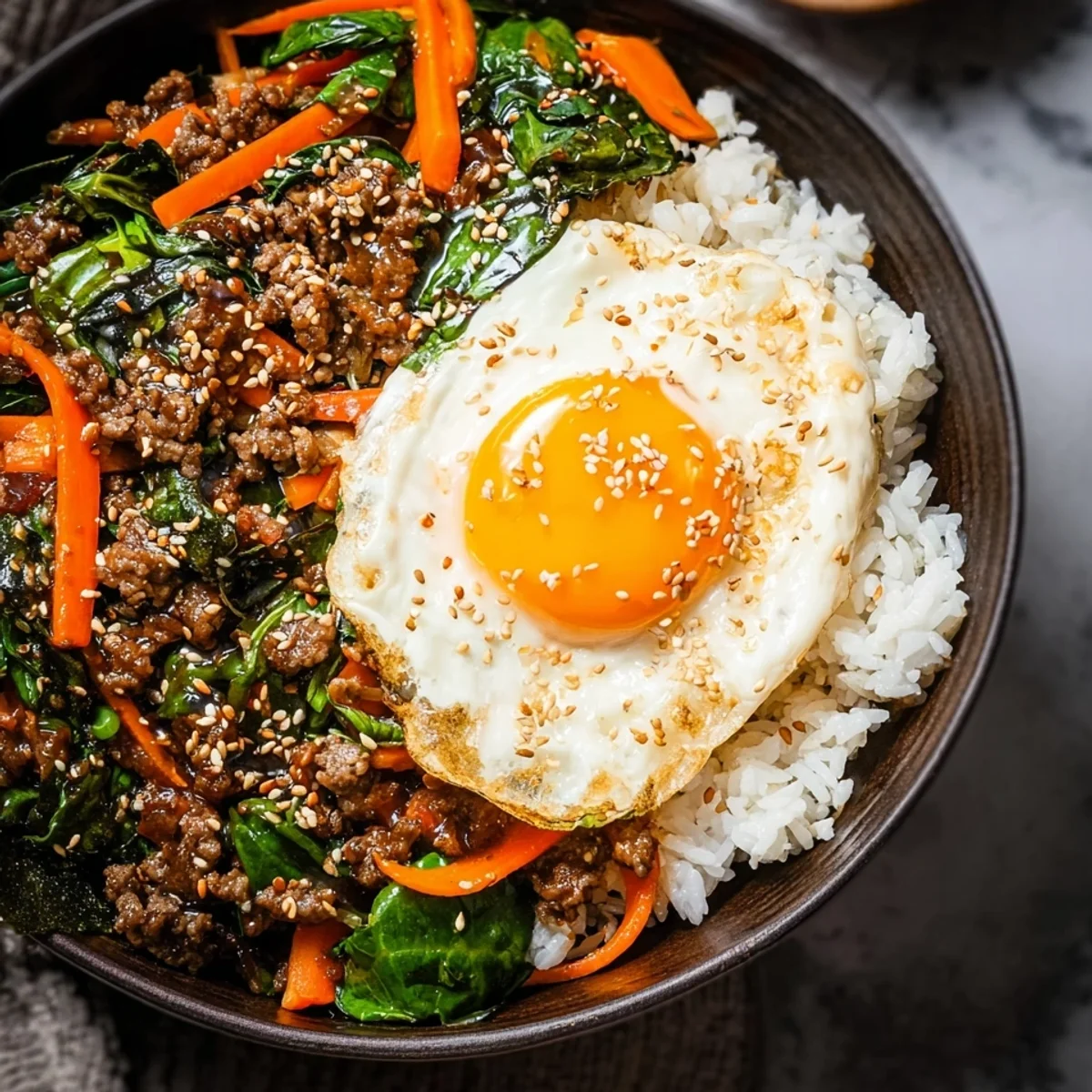


Okay, so picture this: it was a crazy Tuesday, I was starving, and staring into a fridge that looked like it had been ransacked by a tiny, very hungry squirrel. But then, inspiration hit! I remembered a quick bibimbap idea I'd been tinkering with. This one-skillet wonder, my shortcut ground Beef Bibimbap, was born out of pure necessity and a craving for something deeply flavorful without a million dishes. And honestly, it's been a weeknight hero ever since!
One time, I was so excited to get this ground Beef Bibimbap going that I completely forgot to mince the garlic and ginger. I just tossed them in whole! Oops. My husband was like, 'Honey, are these giant garlic cloves a new garnish?' We had a good laugh, and I learned to always prep my aromatics first. Lesson learned the garlicky, gingery hard way!
Ingredients for Your One-Skillet Ground Beef Bibimbap Adventure
- 1 tbsp sesame oil, divided: Oh, sesame oil! This isn't just oil, it's liquid gold for korean cooking. That nutty, toasty aroma just wakes up your senses, ya know? I use a little to brown the beef and a tiny drizzle at the end for that authentic finish. Honestly, don't skip it. It adds so much depth and that unmistakable korean flavor that makes this dish sing. A little goes a long way, but it's crucial for that gorgeous aroma.
- 1 lb lean ground beef (90/10 or 93/7): This is our star protein, friends! I go for lean ground beef because we're cooking it in one skillet, and I don't want a greasy mess. Too much fat and your Ground Beef Bibimbap can feel heavy. 90/10 or 93/7 is perfect, it browns beautifully, gets those crispy bits, and really soaks up all the amazing flavors we're building. Plus, it's super budget-friendly and quick-cooking, which is why we love this shortcut version!
- 1/2 yellow onion, finely diced: An onion is like the unsung hero of so many dishes, and it's no different here. When you finely dice it and sauté it with the beef, it just melts into the background, adding a subtle sweetness and aromatic base. It’s not meant to be a chunky texture, but rather a flavorful foundation. Trust me, it helps build those layers of deliciousness without overpowering anything else in the skillet.
- 3 cloves garlic, minced: Garlic, glorious garlic! You can't have a good Korean-inspired dish without it, right? Three cloves might sound like a lot, but once it's minced and cooked down, it transforms. It adds a pungent, savory kick that brightens everything up. I usually mince mine super fine so it disperses evenly and doesn't leave any raw, harsh notes. It's truly essential for that authentic savory depth.
- 1 tbsp fresh ginger, grated: Fresh ginger is a game-changer. That warm, slightly spicy, aromatic zing it brings is just chef's kiss. Grating it fresh is key, don't even think about powdered ginger here, hon. It cuts through the richness of the beef and adds a vibrant freshness that balances the gochujang. It’s one of those ingredients that makes you go, 'Mmm, what IS that amazing flavor?'
- 1/4 cup gochujang (Korean chili paste): Ah, gochujang! This is where the magic happens, my friends. It's a fermented chili paste that's spicy, savory, and a little sweet it's got layers of flavor you just can't replicate. Don't be scared by the 'chili' part, it's a mellow heat, honestly. It gives our bibimbap that iconic red hue and incredible umami depth. Seriously, invest in a tub, you won't regret it for this and so many other dishes!
Mastering Shortcut Ground Beef Bibimbap: Step-by-Step
- Step 1: Brown Beef & Aromatics:
- First things first, get your skillet nice and hot over medium-high heat with a little sesame oil. Toss in that lean ground beef and break it up. Once it starts to brown, drain any excess fat we want flavor, not grease, for our Ground Beef Bibimbap! Then, add your finely diced onion, minced garlic, and grated ginger. Oh, the smell! Sauté until everything is fragrant and the onion is softened, about 5-7 minutes. Season it lightly with salt and pepper here, to build flavor from the start.
- Step 2: Whisk Gochujang Glaze:
- While your beef is doing its thing, grab a small bowl and let's make that glorious glaze. Whisk together the gochujang, a splash of water, maybe a tiny bit of soy sauce or honey if you like a sweeter kick (totally optional, but I sometimes do!). You want it smooth and pourable, not too thick. This glaze is the heart of our Ground Beef Bibimbap, giving it that signature sweet, spicy, savory punch. It's a quick step but oh-so-important!
- Step 3: Add Veggies to Skillet:
- Now for the color and nutrients! Toss in your fresh spinach, shredded carrots, and sliced cremini mushrooms right on top of the beef mixture. Don't worry if it looks like a mountain of veggies, spinach wilts down like crazy! Stir everything together, letting the veggies cook down for about 3-5 minutes until they're tender-crisp. We want them cooked but still with a little bite, adding great texture to your shortcut Ground Beef Bibimbap.
- Step 4: Simmer with Glaze:
- Pour that beautiful gochujang glaze all over the beef and veggie mixture in the skillet. Stir it really well, making sure every single piece gets coated in that vibrant, spicy sauce. Reduce the heat to medium-low and let it simmer gently for about 5-7 minutes. This is where all those flavors marry and deepen, creating an incredibly rich and cohesive sauce for your Ground Beef Bibimbap. The aroma filling your kitchen will be amazing, I promise!
- Step 5: Fry Eggs:
- While your bibimbap base is simmering, grab another small pan (or wipe out your skillet if you're feeling ambitious and quick!). Fry up some sunny-side-up eggs. A slightly runny yolk is traditional and so, so good with this dish, creating a creamy sauce when it breaks. Cook them until the whites are set but the yolks are still wonderfully jammy. Don't overcook them, that runny yolk is essential!
- Step 6: Assemble & Garnish:
- Time to plate up! Divide the ground beef and veggie mixture into bowls. Top each serving with a freshly fried egg. Now for the fun part: garnishes! A sprinkle of toasted sesame seeds, a drizzle of extra sesame oil, maybe some chopped green onions for freshness. Some kimchi on the side is always a win. Get ready to mix it all up in your bowl and enjoy that incredible, comforting bite of homemade deliciousness!
Oh, making this dish is just pure joy for me. The way the aromatics hit the pan, then that vibrant gochujang glaze gets stirred in, blanketing everything in deliciousness. It's such a comforting process, and the smells alone make my stomach rumble. By the time those eggs are frying, I'm practically dancing in the kitchen. It's a quick, satisfying culinary adventure every time!
Keeping Your Ground Beef Bibimbap Fresh: Storage Secrets
So, you've got leftovers? Amazing! This Ground Beef Bibimbap actually tastes even better the next day, honestly. Just pop the beef and veggie mixture into an airtight container and stash it in the fridge for up to 3-4 days. I wouldn't recommend storing the fried eggs with it though, they get a bit rubbery when reheated. I learned that the hard way when I tried to meal prep a whole week's worth of fully assembled bowls. Oops! Best to fry fresh eggs each time you reheat a serving. Reheat gently on the stovetop or in the microwave.

Creative Twists on Ground Beef Bibimbap: My Go-To Swaps
I've played around with this recipe so many times, trying different things. For the ground beef, ground turkey or even finely diced firm tofu (pressed first!) works surprisingly well if you want a vegetarian spin. I've swapped spinach for kale, and cremini mushrooms for shiitake or even just regular button mushrooms. Bell peppers or zucchini would also be great additions if you're feeling adventurous. I once used leftover roasted sweet potatoes instead of carrots I didn't expect that, but it was delicious! Don't be afraid to experiment with your favorite veggies, it's pretty forgiving.
How to Serve Ground Beef Bibimbap Like a Pro
This Ground Beef Bibimbap is a meal in itself, but you can totally elevate the experience! We usually serve it over a bed of fluffy white or brown rice. For extra crunch, I love adding some toasted seaweed snacks (gim) on the side. And for a little tangy kick, kimchi is a must-have! Sometimes I'll even make a quick cucumber salad with a sesame dressing. Oh, and a drizzle of extra sesame oil and a sprinkle of sesame seeds at the end? Non-negotiable for that authentic finish. Pure perfection!
The Heartwarming History of Ground Beef Bibimbap
Bibimbap, meaning 'mixed rice,' is one of Korea's most iconic dishes, a beautiful medley of rice, seasoned vegetables, meat, and a fried egg, all mixed together with gochujang. Traditionally, it's a labor of love, with each component prepared separately. My shortcut Ground Beef Bibimbap is my humble homage to this incredible dish, making those amazing flavors accessible on a busy weeknight. It’s a testament to how food connects us, allowing us to enjoy global flavors right in our own kitchens, even when time is short.
And there you have it, my friends! Your new favorite weeknight hero, this Shortcut Ground Beef Bibimbap. It's flavorful, it's easy, and it's just so darn satisfying. I hope you give it a try and fall in love with it as much as I have. Don't forget to tell me how it goes in the comments below! What are your favorite bibimbap toppings?

Your Burning Questions About Ground Beef Bibimbap, Answered!
- Can I make this Ground Beef Bibimbap vegetarian?
Absolutely! You can swap the ground beef for firm tofu, crumbled and browned, or even a mix of mushrooms and lentils. Just make sure to season your vegetarian protein well. The gochujang glaze is naturally vegetarian, so you're good to go there!
- What if I don't have gochujang?
Gochujang is pretty essential for that authentic bibimbap flavor, honestly. But if you're in a pinch, you could try a mix of sriracha, a tiny bit of miso paste for umami, and a touch of honey or sugar. It won't be exactly the same, but it'll give you a spicy, savory kick for your Ground Beef Bibimbap.
- Can I use other vegetables in my Ground Beef Bibimbap?
Oh, for sure! This recipe is super flexible. Broccoli florets, bell peppers, zucchini, bean sprouts, or even snap peas would be delicious additions or substitutions. Just make sure to chop them to a similar size so they cook evenly in the skillet. Use what you love and what you have on hand!
- How spicy is this dish?
The recipe as written with 1/4 cup gochujang has a mild to medium heat, a pleasant warmth rather than an overpowering burn. If you like it spicier, feel free to add another tablespoon or two of gochujang! If you prefer it milder, start with less and add to taste. It’s all about what you enjoy!
- Can I prep any components ahead of time?
You bet! You can definitely chop all your veggies and mince your garlic and ginger ahead of time, keeping them in separate containers in the fridge. You could even whisk together your gochujang glaze a day or two in advance. That makes putting together your Ground Beef Bibimbap even faster when dinner time rolls around!